






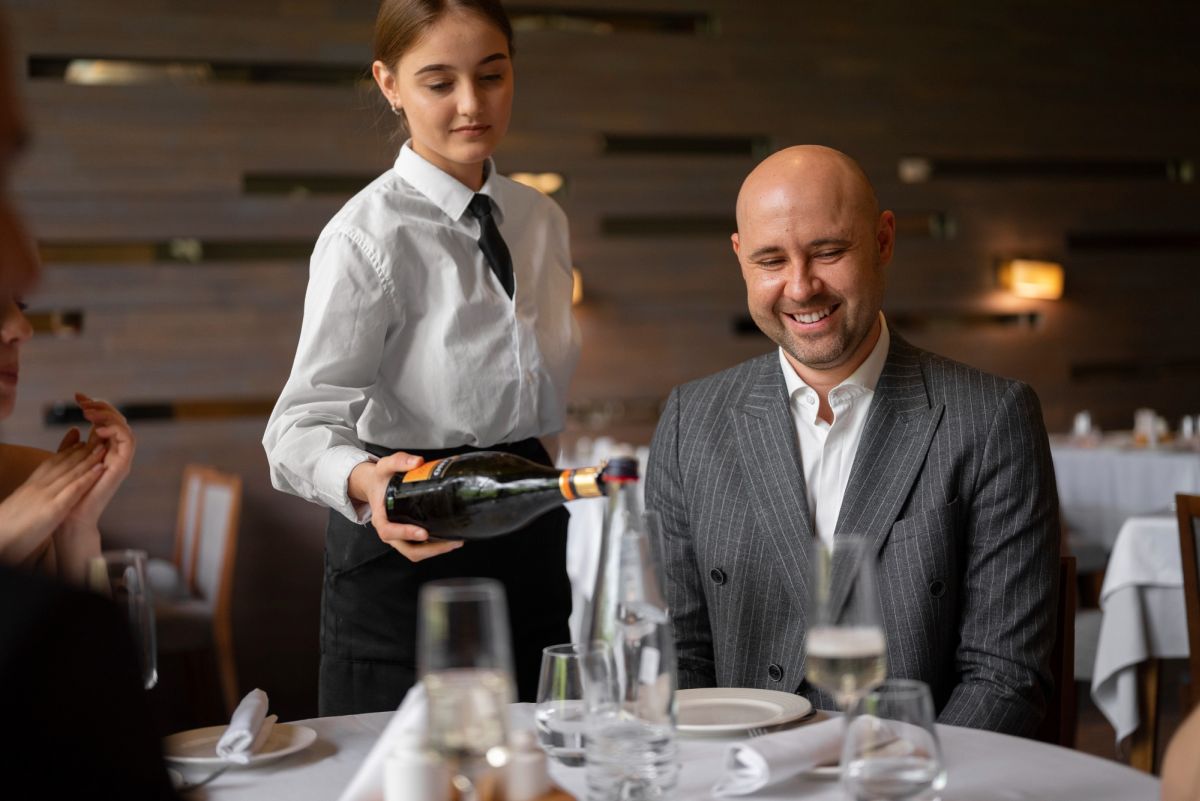
Italian wine is becoming increasingly more global: in recent years, exports have exceeded 8 billion euros annually, confirming Italy as one of the key players in the international market, according to data from the Uiv-Ismea Observatory. Yet, when looking at domestic dining, a very different dynamic emerges: Italian restaurants tend to choose almost exclusively wines from their own region. Between 70% and 75% of the labels on Italian restaurant wine lists come from the same region as the establishment, according to an analysis by Trinko on the Horeca market. This choice reflects the strong connection between cuisine and territory, leading many restaurateurs to favor local wineries both for gastronomic coherence and for the ability to build direct relationships with producers.
“Italian wine is increasingly more global in production and export, but restaurant wine lists continue to show a strong territorial dimension - observes Matteo Pelladoni, cto and co-founder of Trinko - the bond between cuisine and local producers is a cultural asset, but at the same time it can make it more difficult for many wineries to enter restaurant circuits outside their geographical area”.
The role of the restaurant industry in the wine sector is far from marginal. The Horeca channel accounts for about 55-60% of the total value of the domestic wine market, even though it moves lower volumes than large-scale retail. The sector, however, remains extremely fragmented: in Italy, there are around 460,000 businesses among restaurants, bars, and accommodation facilities, and only about 65% have a structured wine list. In this context, gaining access to restaurants can represent a significant challenge for many wineries, especially small and medium-sized ones operating outside major distribution networks.
In recent years, consumer behavior has also contributed to reshaping wine selection in dining venues. According to Trinko, 19% of Italians have reduced the frequency of eating out, but those who choose to go to restaurants pay closer attention to quality. Today, 66% of consumers prefer to order a single high-quality glass of wine rather than an inexpensive bottle, a trend which is prompting many restaurateurs to rethink their wine lists and invest in by-the-glass service. In this context, new digital tools are emerging to facilitate the meeting between supply and demand in the sector. Among them, there is Trinko, the web platform which allows restaurants, bars, wine shops, and hotels to connect directly with producers, discover new labels, and start business relationships in a simple and transparent way.
Copyright © 2000/2026
Contatti: info@winenews.it
Seguici anche su Twitter: @WineNewsIt
Seguici anche su Facebook: @winenewsit
Questo articolo è tratto dall'archivio di WineNews - Tutti i diritti riservati - Copyright © 2000/2026