







In a highly fragmented supply chain such as Italy agri-food sector, the district-based model continues to prove successful. Overall, in fact, a generally very difficult 2025 still saw a new record in exports for Italian agri-food districts, which came close to 30 billion euros, with an overall growth of 4.1% compared to 2024. The wine sector, despite a slight decline (-1.7%), remains the most significant in absolute terms (6.4 billion euros), followed by pasta and confectionery (5.5 billion euros, +6.1%) and agricultural products (4.6 billion euros, +12.3%).
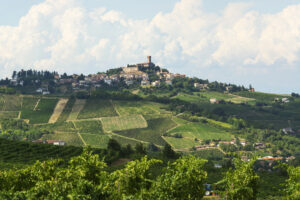
The top-performing districts overall in terms of value were Confectionery of Alba and Cuneo (2.6 billion euros in exports, +13.7%), Wines of Langhe, Roero, and Monferrato (1.9 billion euros, -0.9%), and Food products of Parma (1.7 billion euros, +1.4%). This is according to the Monitor of Italian agri-food districts as of December 31st, 2025 prepared by the Research Department of Intesa Sanpaolo. It also highlights how districts account for 42% of total Italian agri-food export value, and how they outperformed other manufacturing districts (-2.2% in 2025 compared to 2024).
The main export markets for Italian agri-food districts remain Germany (5.2 billion euros, +4%), the United States (3.8 billion euros, -7.1%), France (3.3 billion euros, +4.4%), and the United Kingdom (2.2 billion euros, stable compared to 2024). While many other countries, starting from lower values, are also recording growth (from Belgium to Switzerland, from Canada to Saudi Arabia, from the Netherlands to China), several countries, including Spain, Poland, Romania, Russia, Croatia, Israel, Hungary, Portugal, and the United Arab Emirates, are posting double-digit increases.
As mentioned (and as already emerged from Istat data analyzed by WineNews), within an overall growth context, 2025 was slightly negative for Italian wine exports, which declined by 3.7% compared to 2024, reaching 7.7 billion euros. However, the monitored districts generally performed better. Among the main ones, notes Intesa Sanpaolo, Wines of Langhe, Roero, and Monferrato saw a slight decrease (-0.9%), mainly due to declines in the United States (-9.3%) and Germany (-8.2%), but offset by increases in Poland (+103%) and the Netherlands (+23.4%).
A similar trend was observed for wines from the Verona area (-0.9%, 1.2 billion euros), which lost ground in the United States (-13.4%) but performed well in the United Kingdom (+8.9%) and Canada (+6.8%). The Conegliano-Valdobbiadene Prosecco district also recorded a slight decline (-3.1%, 1.1 billion euros), penalized by sales trends in the United States (-6.6%) and Canada (-24%), only partially offset by double-digit growth in France (+12.2%). Declines were also observed in the Wines of the Florentine and Sienese Hills (-2.5%, 834 million euros) and Wines and spirits of Western Sicily (-2.6%, 123 million euros). More marked decreases were recorded for Wines and spirits of Trento (-12%, 367 million euros) and Wines of Montepulciano d’Abruzzo (-13.8%, 218 million euros). However, there were also positive trends among wine districts, such as Wines and spirits of Friuli (264 million euros, +7%) and Wines and spirits of Bolzano (252 million euros, +1.9%), while the Wines and spirits of the Brescia area showed a strong recovery (+27.9%, 175 million euros), after losing 9 percentage points in 2024 compared to 2023. Overall, wine, despite a slight decline in export value, remains the most valuable sector within Italian agri-food district exports.
“The agri-food supply chain - explains Intesa Sanpaolo in a statement - is supported by our Banca dei Territori Division, headed by Stefano Barrese, through growth models based on innovation, sustainability, internationalization, and strengthening the competitiveness of companies, thanks to the Agribusiness Directorate: a national network composed of 250 operational units, including 94 specialized branches, serving over 80,000 clients”, explains in a note, Intesa San Paolo, which underlines how, through its “Supply Chain Development Program”, it supports 172 agri-food supply chains, 36 of which are sustainable, involving over 8,500 suppliers and nearly 22,000 employees, with a total turnover of around 26 billion euros, across strategic sectors ranging from truffles to cured meats, livestock farming, olive growing, up to dairy production”.
“The strengthening of Italian agri-food exports in international markets demonstrates the adaptability and vitality of a sector that continues to grow by leveraging quality, innovation, and local identity - explains Massimiliano Cattozzi, head of the Agribusiness Directorate of the Banca dei Territori Division at Intesa Sanpaolo - we have actively supported this path with a 10 billion euros allocation dedicated to investments in agri-food supply chains and with a tailored advisory model for extraordinary finance, unique in the national landscape, designed to support Smes in their growth, innovation, and competitive consolidation journeys. In this context, tools such as hyper-depreciation also represent an important lever to accelerate business transformation, which we integrate into our financial solutions to make development plans more sustainable and accessible”.
Copyright © 2000/2026
Contatti: info@winenews.it
Seguici anche su Twitter: @WineNewsIt
Seguici anche su Facebook: @winenewsit
Questo articolo è tratto dall'archivio di WineNews - Tutti i diritti riservati - Copyright © 2000/2026