







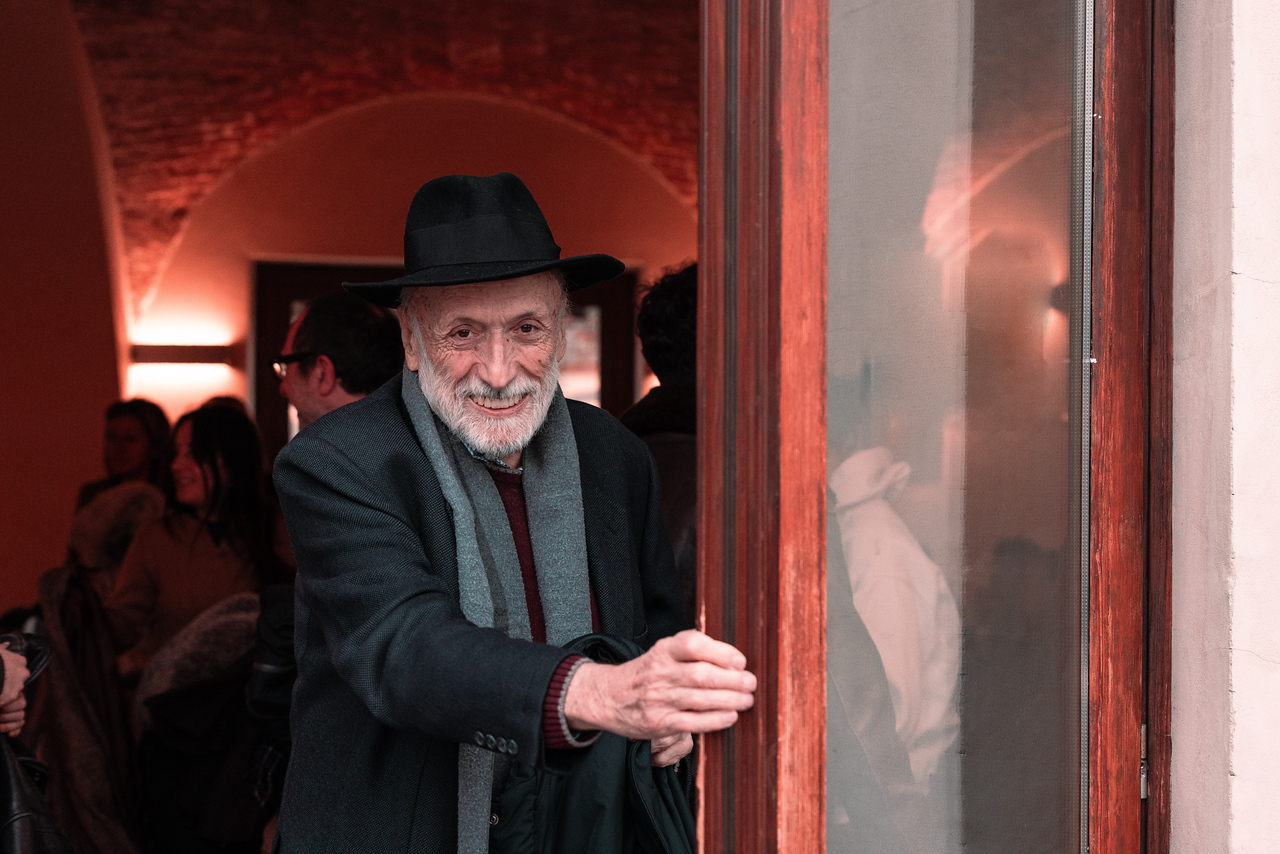
Carlo Petrini was the first to realize that through food, wine, agriculture, and cooking, one could engage in politics. Real politics, with a capital “P”. “Carlin” understood, before anyone else, that through food, wine, agriculture, and cooking, a community’s identity, its rituals, and its soul are forged. Lofty, philosophical, almost “ethereal” concepts, yet always expressed in concrete terms, summed up in his famous motto, which has become a mantra for Slow Food, namely “good, clean, and fair”. Three words that intertwine the theme of the pleasure of food, which must be a right for all; of its quality, for which a fair price must be paid, just as those who work the land and produce food must be fairly compensated. There is a theme that the value of food and wine must be assessed, not the price. There is the issue of environmental sustainability, which is fundamental, with the current food system considered the primary driver of climate change, but which must not clash with radical environmentalism. There is also the issue of a global food system that needs to be radically changed, to move “beyond consumerism and save humanity”. There is a belief that food and drink, agriculture and cuisine, are true culture. That food communities are the first and strongest antidote to rural depopulation, provided that their identity is preserved and not sold (or sold off) solely to the tourism industry. There is trust in young people and their role as leaders of a “revolution” that must be “joyful”, because “you can’t make revolutions with a heavy heart.” So many themes that Carlo Petrini raised and brought to the attention of public opinion and the tables of the world’s powerful, and which, so many times, over so many years, in so many places, from his many visits to Montalcino (as early as the 1980s, ed.) to meetings in Turin or the Langhe, in the many interviews and conversations we had the pleasure of sharing, “Carlin” Petrini has addressed, with openness and never with superficiality, with WineNews. Gifting us with many words through which we wish to remember him.
Just as, in the early 2000s, when Italian wine was embarking on its triumphant rise that would last over 20 years, and the phenomenon now known as wine tourism was beginning to take shape, he urged producers to care for their territories as well as their wineries, saying even then that “we need to change our approach to the territory and its needs. Wine producers, first and foremost, but not only them, should take action because, after all, tourism resources have helped make their products famous, and failing to take this added value into account can be very counterproductive”, Petrini said. This theme was reiterated more recently, when Petrini explained his vision on the balance between identity, progress, and tourism in wine-growing regions, emphasizing that “we must avoid a divide between producers who have a certain income level and others who, in the same municipality, do not have equal opportunities: what is needed is harmonious sharing”.
Another deeply felt issue that Petrini has always addressed in no uncertain terms is that of illegal labor recruitment. As early as 2015, in this interview, “Carlin” told us that it must be “reported immediately; no one can consider themselves immune or pass the buck. I will be one of the most bitter enemies of all those who contribute to this form of exploitation.” It’s an issue we’ve addressed many times with Petrini, who has never cut corners, not even in his own Langhe wine region, as in this 2024 interview, where, speaking also of illegal labor recruitment, he urged: “We must stop driving down food costs if we want to maintain quality of life and social justice”, referring also to those who work to produce food, often under unacceptable conditions. Or as in our last face-to-face chat, in February in Bologna, at the Slow Wine Fair 2026, where he stated: “What is right in agriculture today is to have respect for all workers in the supply chain. “Everyone must have their dignity recognized and must not be underestimated. At the same time, given the shortages in certain parts of this supply chain, which are struggling due to a lack of labor, we must look with confidence to the potential of immigration to ensure generational renewal. But we must treat these people with respect”.
But more generally, especially in recent years, Petrini has always advocated for a paradigm shift, recognizing that ethics, sacrifice, and pleasure must go hand in hand. “The agricultural and food system must change. Through individual choices, and through pleasure. Revolutions aren’t made out of a sense of gloom. They start in our homes, for example, by reducing waste”, as he told us here, Petrini, who also urged us to “recognize the value of food” because it changes our lives and helps us overcome compulsive consumerism”, arguing that “after the Industrial Revolution, founded on profit and compulsive consumerism, we have entered a new historical phase called the ecological transition because we have realized that the planet’s resources are not infinite. And recognizing, today, the value of food changes the way on which we have based a large part of our existence”.
A revolution, a term always dear to Petrini, who, speaking to young people, said, “must be joyful”, as he reiterated in this 2024 “lectio magistralis” at the Maxxi cultural center in Rome. Petrini took a holistic and universal approach to food issues, going so far as to argue that “it is our lives that must be sustainable: never before in this historical moment have we been so aware of the importance of the food system, in its entirety, with regard to environmental degradation. And, therefore, the need to regenerate the way we eat and produce is a necessity that can no longer be postponed, lest we become complicit in an environmental upheaval that has no parallel in history. To think that this food system is primarily responsible for 37% of CO2 emissions is staggering”.
With a “Carlin” Petrini capable of speaking to the world, sending out messages of far-reaching significance, yet without losing touch with his homeland and Italy. As when he reminded us that “food communities allow us to avoid depleting our territories and losing Italy’s heritage”, and that, however, “at this historic juncture, we must rebuild communities to preserve Italy’s heritage,” with “agriculture serving as the backbone of small towns at risk of depopulation”. Recalling, in less troubled times (it was 2018), that “for “Made in Italy” to be credible, it must be consumed by Italians”, and reiterating how “it is essential to save small villages, places of beauty, of our history, and of our identity”. But we need a new sense of community to sustain them; we need multifunctional shops that focus on local products, but also on services, and are run by young people. Not just for tourists, but also so that those who live in those places can once again truly feel like a “community””.
This is a highly topical issue, like so many others addressed by Petrini, including with WineNews, of which we have touched on only a small part here. It is another way to pay tribute to, remember, and keep the legacy of Carlin Petrini alive, a legacy worth remembering, as Slow Food has done, with one of his most beautiful quotes: “Those who sow utopias reap reality”.
Copyright © 2000/2026
Contatti: info@winenews.it
Seguici anche su Twitter: @WineNewsIt
Seguici anche su Facebook: @winenewsit
Questo articolo è tratto dall'archivio di WineNews - Tutti i diritti riservati - Copyright © 2000/2026