


Sunday 20th of September 2026 - Last Update: 21:50






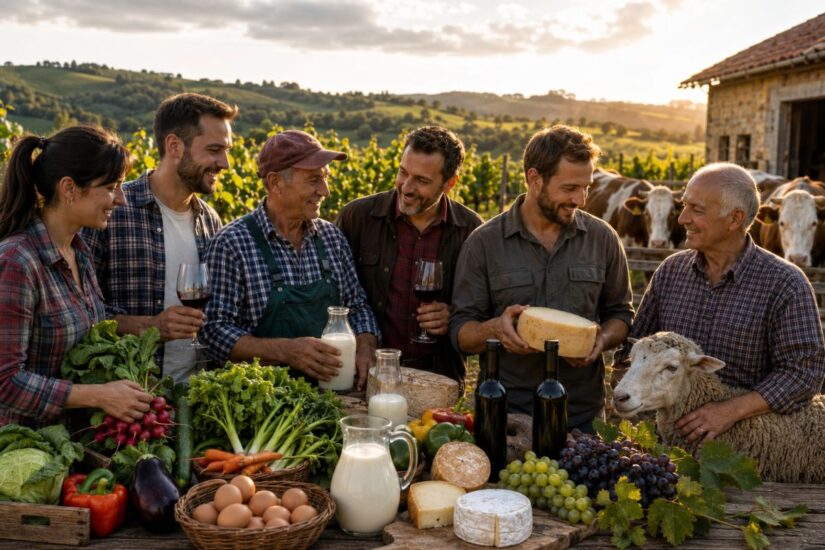
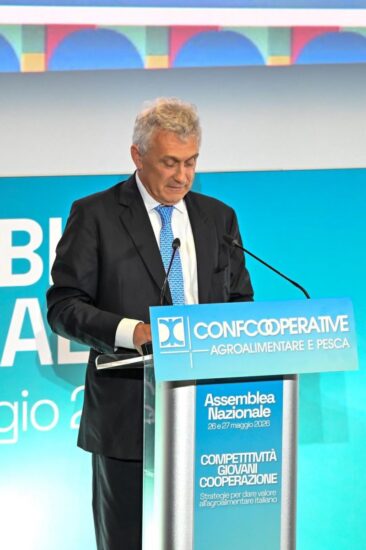

More than 2,500 cooperatives in the agricultural and food sector, for a total of 407,000 members and 75,000 employees, a turnover nearing 38 billion euros, accounting for more than 20% of Italy agri-food “made in Italy” (with the aggregate having grown by 25% in recent years, despite a decrease in the number of cooperatives), and sector exports of around 8 billion euros. The system structure is characterized by a majority of micro-enterprises, representing 56.9% of the total, followed by small enterprises at 27.3%, although it is the medium-to-large segment that drives value creation: larger cooperatives generate over 88% of turnover and employ more than 80% of workers. All this without forgetting that 1 out of 4 agri-food products on our tables comes from Italian agri-food cooperation, which produces over 60% of Italian wine, 50% of fruit and vegetables, and 70% of dairy products. These are the figures of Confcooperative Agroalimentare e Pesca, which today, at its National Assembly in Rome, confirmed Raffaele Drei as president, with Luca Rigotti (Mezzacorona) also confirmed as head of the Wine Sector (see our interview here), for the four-year term 2026-2030.
Already vicepresident of Conserve Italia and a long-standing cooperative executive, Drei had already been appointed president by the National Council in December 2024. The Assembly ratified the decision and, at the same time, approved the federation’s new name, now Confcooperative Agroalimentare e Pesca.
Confcooperative figures are the result of a deliberate strategy of industrial consolidation, so much so that “both the number of employees and associated companies have remained intact”, explained Drei in his report, at the presence of the Minister of Agriculture Francesco Lollobrigida, who emphasized that “the cooperative sector is a strategic asset for agri-food and fisheries”. Contributions also came from the Executive vicepresident of the European Commission Raffaele Fitto, vicepresident of the European Parliament Antonella Sberna, and Members of the European Parliament Cristina Guarda and Dario Nardella, highlighting employment stability as a distinguishing feature in a decade (2010-2020) which saw Italian farms decline from 1.62 million to 1.13 million, with a drop of 30%. Over the past 20 years, 250 cooperatives have disappeared from the map due to mergers and incorporations, a trend the federation considers structural and one to be encouraged. According to an analysis by the Confcooperative Research Center, 49.8% of cooperatives cite improved competitiveness as the primary reason for aggregation, followed by cost reduction (41.9%) and strengthening of bargaining power in the market (36.2%). “Aggregation is an essential lever to increase critical mass and planning capacity”, said Drei, calling for public policies which “reward those who choose to join forces, strengthening the economic organization of supply chains”.
The cooperative sector has also put forward several policy-related requests. Drei reiterated the need, at the EU level, even within a possible Single Fund framework, to ensure adequate and stable resources dedicated to agricultural policy, guaranteeing a strong Cap genuinely oriented toward the competitiveness of European agri-food supply chains. Among the requests put forward today: strengthening sectoral interventions, building a truly effective risk management system, and supporting research and innovation. On the fisheries front, the federation reiterated the need to continue reforming the Common Fisheries Policy (Cfp) “to overcome the current system, which is unable to reconcile environmental aspects with economic and social ones. It will also be necessary to avert the risk of drastic cuts to the resources of the Multiannual Financial Framework (Mff) 2028-2034 and to aim for renewed funding of the National Solidarity Fund for Fisheries and Aquaculture (Fsnpa).
There is also the issue of generational turnover (which WineNews recently explored in the wine sector in this article). In the past five years, 63% of agricultural and fisheries cooperatives have recorded the entry of members under 40, but in more than half of the cases these were family successions. Youth involvement in decision-making processes remains low, being considered high in only 18% of surveyed cooperatives. Yet, in terms of innovation, their contribution is considered significant or very significant by 69% of enterprises. “Cooperation can become a laboratory for active youth policies”, concluded Drei, identifying Cap bureaucracy as one of the main obstacles to accessing support tools.
Copyright © 2000/2026
Contatti: info@winenews.it
Seguici anche su Twitter: @WineNewsIt
Seguici anche su Facebook: @winenewsit
Questo articolo è tratto dall'archivio di WineNews - Tutti i diritti riservati - Copyright © 2000/2026