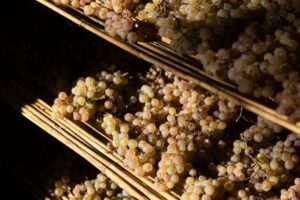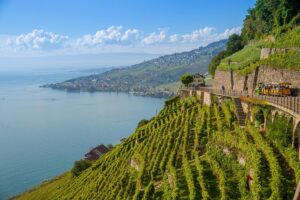








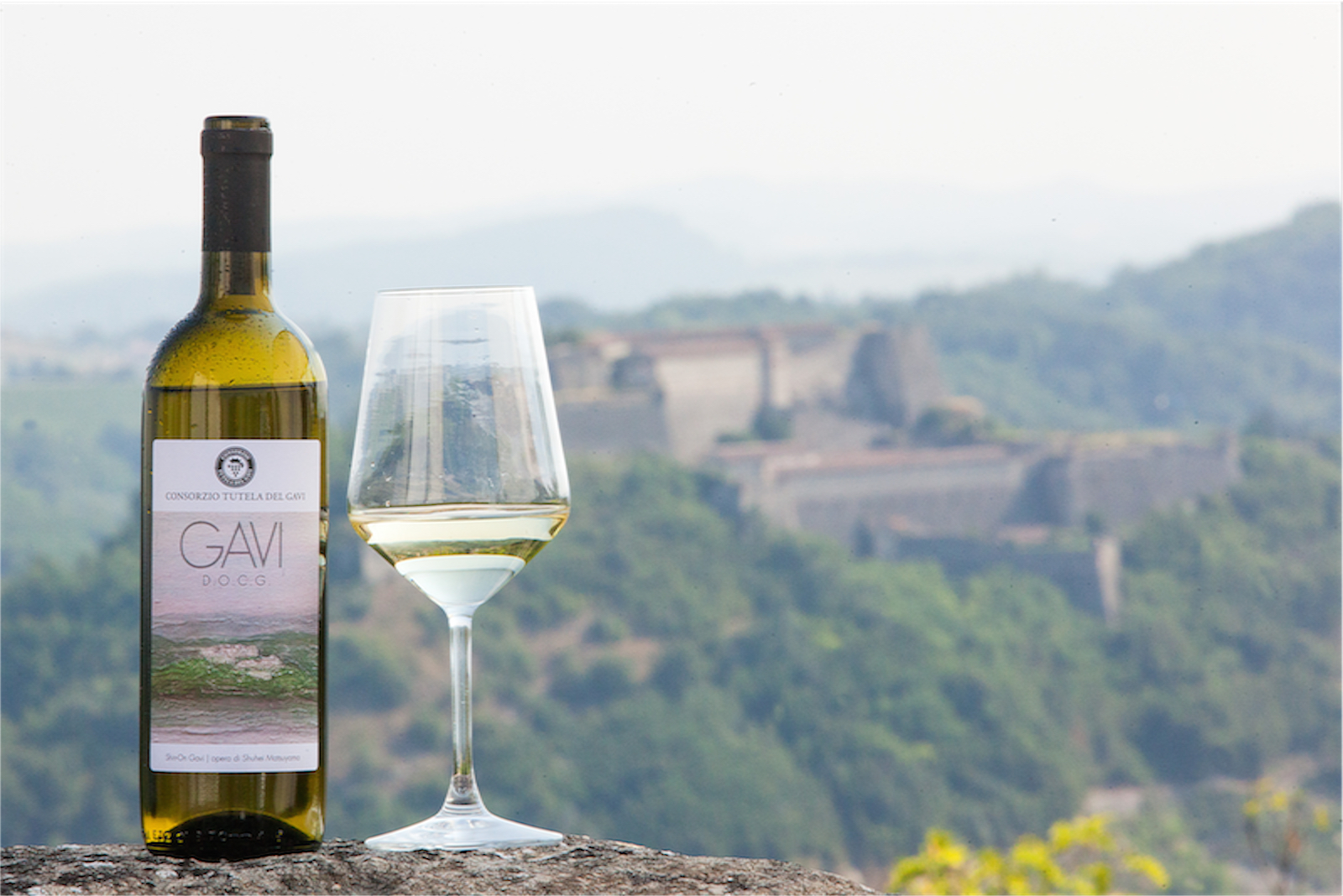
More than 12 million bottles were exported in 2025, representing 91% of total production, to markets around the world, from Europe to North America, from Asia to the Middle East. There was also a slight but symbolically significant reversal in the domestic market: after a decade of steady decline, sales in Italy have returned to growth, surpassing one million bottles. These export figures, which reflect the well-known international trend of white wine consumption overtaking that of red wines, were reported by Consorzio di Tutela del Gavi, the protection consortium of the historic Piedmontese white wine denomination - Cortese di Gavi obtained DOC status in 1974. Made from the Cortese grape, Gavi is recognized for its versatility, suitable both as an aperitif and throughout a meal, as well as for its ability to pair with local cuisines around the world. It has a moderate alcohol content, a marked freshness which makes it highly enjoyable to drink, and the capacity to remain appealing even in age-worthy versions.
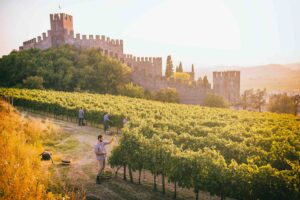
This long-term growth is also evident in production figures, with a +48.2% increase in bottles produced over the past 20 years (corresponding to an additional 4.47 million bottles), bringing the total to 13.7 million bottles released onto the market in 2025. These figures demonstrate the resilience of Piedmont great white wine, made from Cortese grapes beneath the walls of the historic Forte di Gavi, despite the challenges currently facing the global wine industry. The United Kingdom remains by far the leading market for Gavi DOCG, with 7 million bottles sold in 2025, accounting for more than 60% of total exports. The United States ranks second with more than 1.5 million bottles (13%), while Germany ranks third (5.6%), followed by Russia, Ireland, and Malta, each with over 300,000 bottles of Gavi in circulation. Canada has also strengthened its position, recording a +43% increase compared to 2023, while the United Arab Emirates have consolidated their role as the leading market in the Middle East. Among Asian markets, Japan remains the primary destination, although China has recorded particularly significant growth over the past two years: exports of Gavi DOCG to China rose from fewer than 10,000 bottles in 2023, representing 0.06% of the total, to more than 100,000 bottles in 2025, increasing its share to 0.82%.
Within national boundaries, consumption is heavily concentrated in the northern regions: Piedmont represents the main market, accounting for 42.46% of national volumes in 2023 and 44.19% in 2025. The other regions of Northern Italy follow closely, absorbing 40.96% of total domestic consumption in 2025, ahead of Central and Southern Italy. The slight increase in Piedmont share is attributable to growing interest in wine tourism and increased investment by local wineries in direct-to-consumer experiences, bringing visitors straight to the cellar. As for global distribution channels, large-scale retail remains the leading sales channel, although there has been a notable shift in market shares: modern retail distribution declined from 58% in 2023 to 52% in 2025, while the HoReCa channel (hotels, restaurants, and catering) increased from 42% to 48%. Maurizio Montobbio, president of Consorzio di Tutela del Gavi, affirms that “data confirms that Gavi DOCG is one of Italy healthiest white wines. We are navigating international crises, tariffs, and conflicts while demonstrating resilience thanks to the shared efforts of producers, the Consortium, and institutions, both in the vineyard and winery and across local and international markets. We are aware that Gavi - both classic and contemporary - deeply rooted in history yet highly versatile in food pairing, appeals to discerning and diverse consumers, and this gives us confidence in the domestic market. We view its growth with interest, even if still modest, as it shows that there is still room to strengthen the value of our wine in Italy, including by positioning ourselves as a wine tourism destination. At a time when consumers increasingly more look for direct contact with both the product and those who make it, the winery is becoming a place of discovery and connection, where experiential wine consumption is increasingly shifting from restaurants to the cellar. As we face future challenges, we will need to closely monitor the dynamism of markets and continue working to maintain a clear identity, unwavering attention to quality, and the excellent value for money that has been our strength over the years”.
Gavi DOCG was also the focus of lectio magitstralis “Science over time in white wines”, held in Gavi at Tenuta La Giustiniana, featuring a lecture by professor Luigi Moio, vicepresident of the Oiv (International Organisation of Vine and Wine), the scientific and technical benchmark for the sector (which Moio chaired from 2021 to 2024), full professor of Winemaking at the University of Naples Federico II, Department of Agriculture, and wine producer at Quintodecimo in Irpinia. The theme was not longevity, but rather the science of time and a field of knowledge to be explored rigorously within the living matter of grapes, must, and wine.
Professor Moio developed a lecture dedicated to the ability of white wines to last over time, not merely as resistance to aging, but as the preservation of their sensory identity. This reflection revisited some of the central themes of his scientific and educational work, beginning with the concept of biological continuity between grape and wine. “At this moment, wine needs rigorous technical reflection”, explained Moio, urging the industry to move beyond the generic use of certain terms that are often overused in the language of wine. One such term is precisely “longevity”. A wine is not long-lived simply because it lasts for many years. Rather, it is long-lived if it succeeds in maintaining its integrity, recognizability, and sensory coherence over time. According to Moio, this issue is particularly relevant to white wines, which are increasingly challenged by climate change, rising oxidative processes, and the need to preserve freshness, tension, and aromatic precision. Wine was described as an “unstable balance”, a complex substance which requires understanding and careful guidance. It is essential to understand which components are in motion and how polyphenols, aromas, precursors, oxygen, acidity, and structure evolve over time. At the heart of the lecture was also the concept of the biological continuity of sensory identity: what a wine becomes over time cannot be separated from its point of origin. A wine capacity for positive evolution begins before the cellar, within the biochemical potential of the grape itself and in the relationship between variety, vine, and terroir. Moio emphasized that, in wine, “genetics” carries enormous weight: the raw material is the deep foundation upon which every possibility of longevity is built. From this perspective, grape varieties such as Cortese, the variety with which Gavi is identified, become particularly interesting case studies. Time, therefore, is not passive waiting but the consequence of precise choices. From vineyard to winery, the ability to evolve remains the result of profound technical expertise.
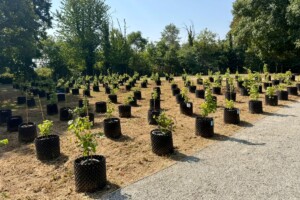
The meeting also highlighted a new economic and cultural theme: the drinkability of white wines, especially when based on lightness, ease of drinking, moderate alcohol content, and tension, will become increasingly difficult to achieve. In a climate which tends to accelerate ripening, increase alcohol levels, and heighten oxidative risks, producing wines which are delicate, fresh, and capable of aging will become an ever more complex challenge. This complexity is embedded in the Dna of Gavi and opens up interesting market prospects. For the Gavi denomination, the event represented an important opportunity for deeper reflection: understanding how a white wine can remain true to itself over time, continuing to express its landscape, its grape variety, and its sensory identity. It also confirmed the path undertaken by Consorzio Tutela del Gavi through “Ambrosia”, a project funded since 2023 to study the adaptation of the Cortese grape within its historic growing area. Through this agronomic study, the Consortium has launched a process of analysis and monitoring aimed at gaining a more precise understanding of the relationships between grape variety, soil, climate, and the glass.
Copyright © 2000/2026
Contatti: info@winenews.it
Seguici anche su Twitter: @WineNewsIt
Seguici anche su Facebook: @winenewsit
Questo articolo è tratto dall'archivio di WineNews - Tutti i diritti riservati - Copyright © 2000/2026