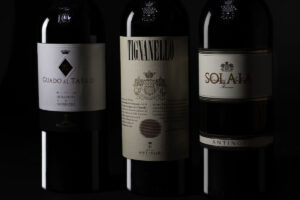






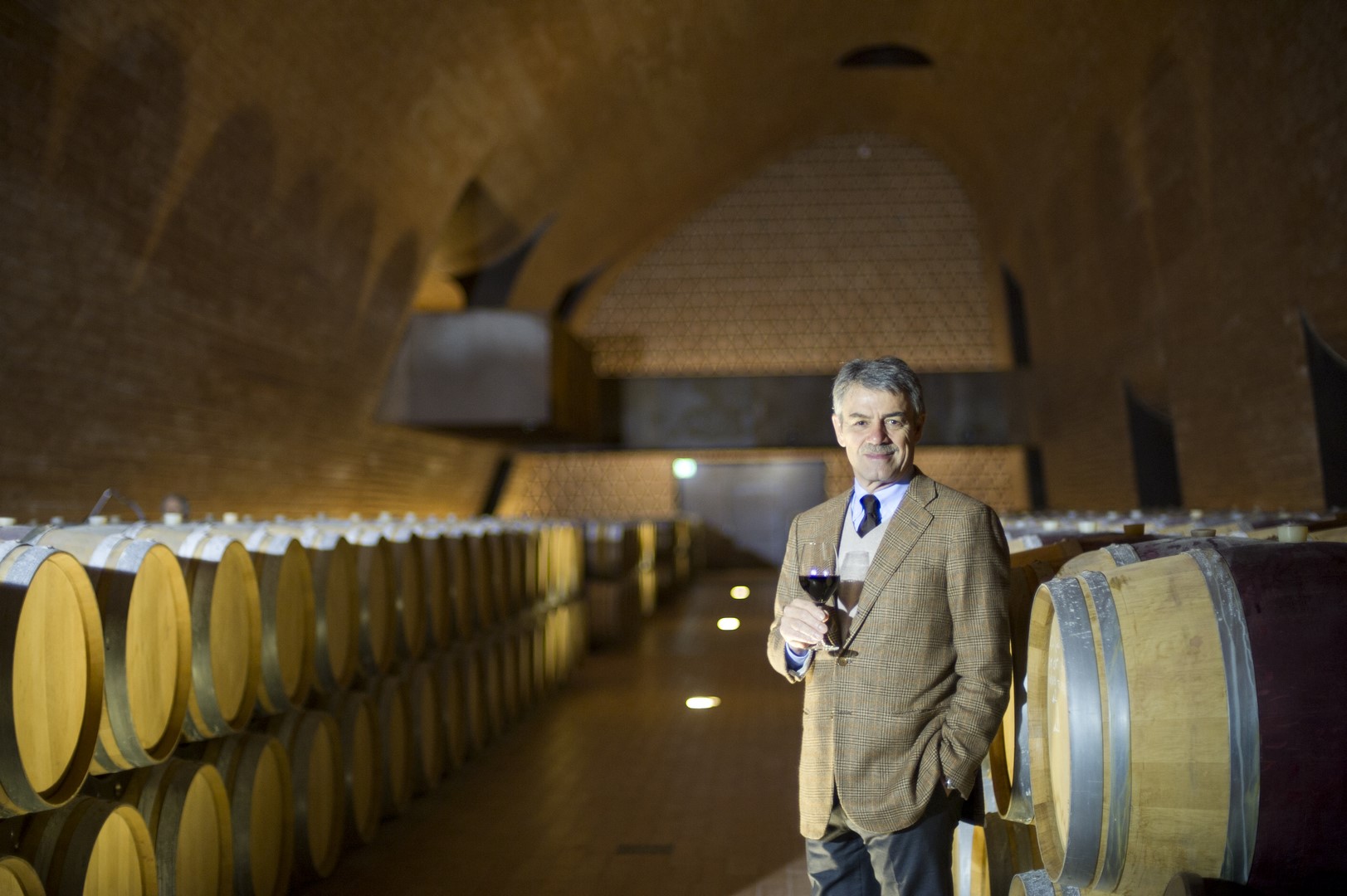
“In a more competitive and volatile environment, “healthy” management is not a theory: it is the coherent orchestration of planning, finance, agronomy, winemaking, people, marketing, and sustainability. Working along these axes, with measurable objectives and performance indicators, makes it possible to protect the brand value today and grow it tomorrow”. This is the conclusion of a communication by one of the most accredited and respected wine managers, Renzo Cotarella, among the first major winemaker-managers in Italy (and recently awarded with the 2026 “Winemakers’ Winemaker Award” by the Institute of Masters of Wine), ceo of Marchesi Antinori, one of the most important and admired players in the sector in Italy and worldwide. It appears in a report on managing a wine company today, which we have received and are pleased to publish (and in the coming days, our video interview on WineNews, ed), presented at “Forum sul mercato del vino” - the “Wine Market Forum”, held in recent days in Castiglione in Teverina and promoted by the Chiasso-Cotarella Wine Consulting Firm: “Ripensare il vino: momenti e strategie per crescere in un mercato che cambia” - “Rethinking wine: moments and strategies for growing in a changing market”.
Business management according to Renzo Cotarella, ceo of Marchesi Antinori
The wine sector is being called to undergo a deep transformation. International markets are changing rapidly: consumption models are evolving, cost pressure is becoming structural, competition is increasing, and macroeconomic, geopolitical, and climatic factors are adding new and often unpredictable variables.
In this context, wine can no longer be interpreted solely through its traditional dynamics: it must be rethought in its relationship with the market, how it is positioned, communicated, distributed, and governed.
This report has an operational objective: to offer an interpretation of what it means to lead a wine company today in a healthy, sustainable, and competitive way: planning, economic discipline, technical coherence, and alignment between vineyard, winery, administration, sales, and positioning. In other words: how to move through change without being overwhelmed by it. Because in a sector that works on long timelines but must react quickly, the difference is made by those who manage best.
Healthy management begins with long-term thinking
Wine is a product with long cycles: decisions made today - rootstocks, planting density, clones, canopy architecture, investments in the winery - produce effects in 3, 5, or 10 years. For this reason, healthy management doesn’t limit itself to a single season but is based on long-term planning integrated across the entire value chain.
A “healthy” wine company: regularly invests in vineyards, accepting a slow and gradual Roi; maintains a generational vision, prioritizing continuity over short-term maximization; and doesn’t sacrifice quality to cash in sooner.
Integrated planning: production and sales must communicate
Alignment between sales (demand and channels), production (volumes, styles), and vineyards (plantings, yields) makes it possible to produce what is needed and to sell what is produced in the best possible way.
For this reason, it is essential that the sales team develop a 5-year sales plan, and that this plan communicates bidirectionally with the development plan for production over the same period. Bidirectional communication also means being able to modify one plan or the other based on existing constraints reconsidering distribution or positioning levers, or adjusting vineyard allocation strategies.
Example: if a limited-availability label grows by +12% year-over-year in a strategic market, decisions on new plantings or rebalancing must be made 4-5 years in advance to avoid stock pressure or forced pricing.
Financial management and management control: wine operates with deferred liquidity, so time is a critical variable
Wineries incur costs long before they generate revenues, from a few months for a young white wine to 8 years or more for a Riserva.
Financial health is built on cost oversight, debt management, and cash-flow governance.
Here are some of the operational pillars:
1 - Fixed costs under control (energy, personnel, maintenance): yearly reduction targets through energy efficiency and scalable contracts.
2 - Avoid excessive leverage: define alert thresholds for leverage and financial charges/revenue ratio.
3 - Management control: establish process benchmarks and oversee cost control in the vineyard and winery, warehouse efficiency, promotion incidence, and Opex/revenue ratio.
4 - Cash-flow cycle: sales - collections - reinvestments.
Example: increasing average collection time from 60 to 90 days on 10 million euros in revenue generates a need for over 800,000 euros in working capital. Acting on payment terms, customer credit rating, and incentives for collection often has a greater impact than linear cost-cutting.
Agronomy: quality and efficiency
The primary value arises in the vineyard. Vineyard management must be effective (aligned with the wine style/positioning) and efficient (cost/ha aligned with expected margins).
Key levers:
Vineyard management by destination
Soil capital and biodiversity: more organic matter means better water resilience and greater quality stability across vintages.
Climate resilience: tolerant rootstocks, targeted water management, higher leaf canopies, and cover crops to reduce evapotranspiration.
Technology and sustainability: mechanization, environmental awareness, autonomous systems.
Practical example: a vineyard designed to produce grapes for a specific wine must be planted and managed according to that intended destination.
Winery: governance of quality
From vinification to bottling, quality must be safeguarded through coherent technological choices, stable processes, and controlled costs.
Critical points:
Adequate technology: fermentation control, reduction/oxidation management, aromatic protection, cleanliness.
Consistent purchasing: components aligned with product positioning (differences of 0.20 - 0.25 euros per bottle on large volumes change the economics).
Energy and processes: insulation, rational use of cooling, heat recovery, optimized sanitation.
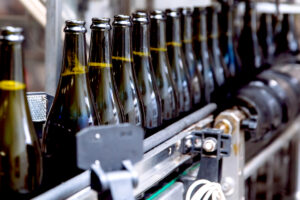
Planned maintenance: preventing equipment downtime (pumps, presses, bottling lines) reduces non-conformities and extraordinary costs.
Just as a 5-year sales plan must correspond to a 5-year vineyard production plan, an annual sales budget by market/channel must correspond to a 12-month bottling plan by format, closure, packaging, and customization. This constant dialogue between sales and production ensures optimal product management, in the winery and in the market.
People: culture and skills as assets
Quality is a cultural matter before a technical one. Training and widespread ownership are essential: everyone must understand their contribution to final quality and economic performance.
Concrete actions:
Training plans (agronomy, oenology, safety, sales, languages).
Regular internal tastings.
Short, frequent production-sales meetings to align stock, launches, and campaigns.
Constant contact between ownership, management, and all collaborators.
Clearly defined and broadly distributed responsibilities.
Clear, measurable objectives with regular feedback.
Marketing and positioning: interpret, don’t chase
Healthy companies build a clear and readable identity (terroir, style, technical choices) and maintain their positioning by interpreting the market.
Guidelines:
1 - Reputation: continuous relationships with opinion leaders and the press; a slow-growing capital, quick to lose.
2 - Identity: a simple, coherent message (values, style, identity, reasons to believe).
3 - Consistency: avoid structural discounts which erode premium branding and are difficult to reverse.
4 - Policies and role of each channel, for example:
Horeca - image and endorsement.
Retail - volumes, but with discipline.
Export - global brand and country-risk diversification.
Drc - direct relationship more than margin.
Proprietary e-commerce - price benchmark and direct consumer communication.
Direct sales at the winery - shift from product to the experience around it.
In conclusion, in a more competitive and volatile environment, “healthy” management is not a theory: it is the coherent orchestration of planning, finance, agronomy, winemaking, people, marketing, and sustainability. Working along these axes, with measurable objectives and performance indicators, allows a company to defend today’s brand value and enable its growth tomorrow.
Copyright © 2000/2026
Contatti: info@winenews.it
Seguici anche su Twitter: @WineNewsIt
Seguici anche su Facebook: @winenewsit
Questo articolo è tratto dall'archivio di WineNews - Tutti i diritti riservati - Copyright © 2000/2026