


Sunday 20th of September 2026 - Last Update: 21:50







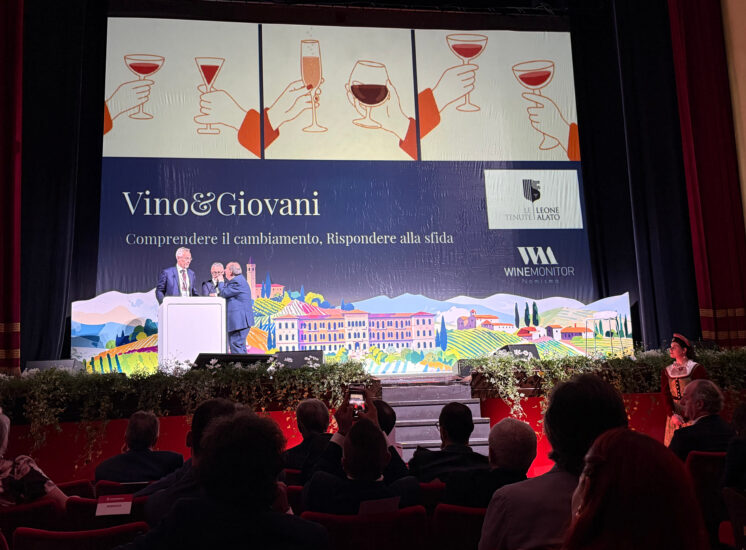
The projections by Nomisma Wine Monitor clearly show that wine consumption lost across successive generations has not been recovered by those that followed. This scenario makes it urgent to engage younger people with a narrative about wine that starts from their own sensibilities, which are decidedly different from those of their peers two generations ago. It is therefore no surprise that the topic was addressed at the Assoenologi Congress No. 79, held in recent days in Conegliano, in the heart of the Conegliano Valdobbiadene Prosecco Superiore DOCG hills (where, incidentally, the Minister of Agriculture Francesco Lollobrigida also talked about it in an interview with WineNews, ed). Carlo Cambi, a longstanding and one of the most brilliant voices in Italian wine and food journalism (now writing for the daily “La Verità” and the weekly “Panorama”), led the discussion in the talk show “Vino e giovani: comprendere il cambiamento, rispondere alla sfida” - “Wine and youth: understanding change, responding to the challenge”. Through his references, he placed wine within literature, history, and philosophy, also recalling Pope Leo XIV latest encyclical, in which Artificial Intelligence is compared to the Tower of Babel, warning against the dangers of homogenization into a single digital language and the pursuit of unlimited power that leads humanity to replace God. Even the language used by enologists, critics, and communicators, often standardized and saturated with technical jargon, distances the end consumer, especially young people, from truly understanding wine. To bring them closer, it is necessary not only to “revise” how wine is communicated, but above all to understand the ongoing changes. This, in essence, was the key message that emerged from the speakers’ contributions.
“Young people - underlined Paolo De Castro, president of Nomisma, former Member of the European Parliament and Minister of Agriculture - will be the consumers of tomorrow. To engage them and give a strong direction to communication around responsible consumption, we must understand their behaviors and the cultural factors behind them”.
“Young people are intimidated by a wine world that presents itself as complex - confirmed Marianna Neri, who together with her father Giacomo and her brothers Giovanni and Gianlorenzo runs Casanova di Neri, the family business and one of the most prestigious brands of Brunello di Montalcino - I have always lived in this environment and, understanding this limitation, I decided to position myself as a friendly ambassador of wine, passionate about the territory and its wines. Effective communication can overcome barriers and engage young people, encouraging them to approach wine and develop a passion for it. I hope other young producers will adopt this approach”.
Along the same line of “understanding” the relationship between youth and wine is the project by Tenute del Leone Alato, the holding company of the Generali Group (about 600 hectares of vineyards located in some of Italy most suitable wine-growing areas, ed), in collaboration with Nomisma Wine Monitor - “Vino & Giovani, comprendere il cambiamento, rispondere alla sfida” - Wine & Youth: understanding change, responding to the challenge”. “It is necessary to go beyond simply capturing a snapshot of change in order to have a compass to navigate it - explained Igor Boccardo, ceo of the Group - having an up-to-date, solid, and in-depth reading of consumer changes is no longer just an option for companies, but a necessary condition to ensure continuity across the entire Italian wine supply chain, from producer to distributor”. “Over the years - illustrated Denis Pantini, head of Nomisma Wine Monitor - wine consumption has progressively declined and has become increasingly concentrated among older generations, while consumption among those under 45 has decreased. The result is that without generational turnover, consumption is destined to decline further”. The analysis path launched by Nomisma Wine Monitor and Tenute del Leone Alato, to be shared with other stakeholders in the supply chain, consists of two main parts: an examination of changing wine consumption patterns and the definition of taste preferences, with a focus on Generation Z (under 30). Specifically, phase one will involve 1,500 young people under 30 in a quantitative consumer survey, while phase two will focus on experience through focus groups and blind tastings. “This will allow us - concluded Pantini - to deepen our understanding of young people relationship with wine, capturing perceptions, barriers, imagery, and preferences through direct comparison and blind tastings of different types of wine”.
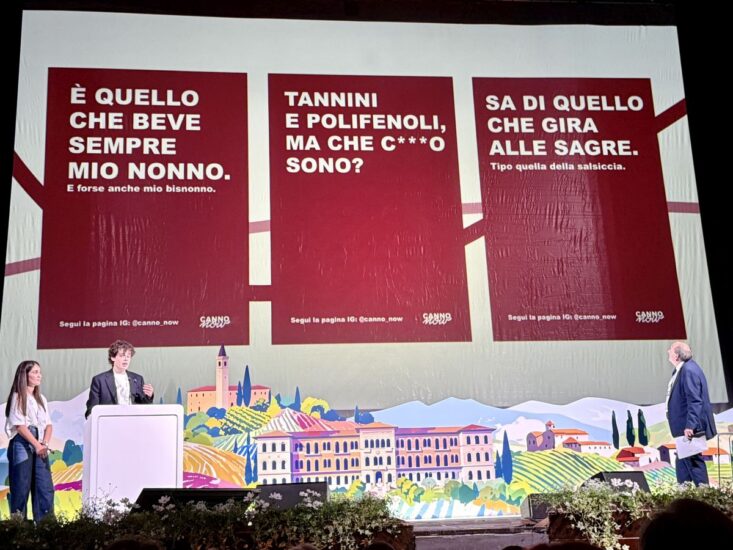
The project “CannoNow: Il vino giovane”, an initiative promoted by Sardegna Ricerche in collaboration with the University of Cagliari, Ied Cagliari, and Assoenologi, led by Riccardo Cotarella, has already produced results. These were presented on stage at the Congress by students Beatrice Lai and Leo Gambacorta. The key milestones and focal points of the project included the involvement of over 1,000 students, as well as research and the development of new ways of narrating wine, with the aim of overcoming the perception of wine as something distant and reserved for experts, making it accessible and part of everyday life. “Taking part in tastings during the project brought us closer to wine as part of a broader culture - they explained - and when we asked ourselves what Cannonau represents for us, the answers were: “our grandfather wine” and “a wine only experts can talk about”. In other words, we are prisoners of an excess of perfection: our generation is performance-driven, but it is also searching for more authentic experiences. The project therefore aims to “profane” wine, not in a negative sense, but by making it more approachable and less formal, placing it within the context of young people experiences”. The communication strategy consists of several phases: a “teasing” phase to generate interest, followed by social and web activities, and then events that use the red thread as a metaphor to connect people with wine and the land, starting from the communication campaign”. The choice of the red thread is inspired by the poetic use of it in the works of Maria Lai, a contemporary Sardinian artist. “We sparked curiosity in the city of Cagliari - continued the students - by placing red threads in the urban space, turning them into an iconic reminder of mindful drinking, in a form of “guerrilla marketing”. The next step involved billboards inviting people to discover what it was about, directing them to social media pages, followed by content columns and memes that brought together students and wineries on the island to develop digital formats, social campaigns, and storytelling designed for a modern, conscious consumption. One example of text, placed on a red background on billboards around the city, read: “Tannins and polyphenols, what the hell are they?” and below: “follow the IG page @canno_now”.
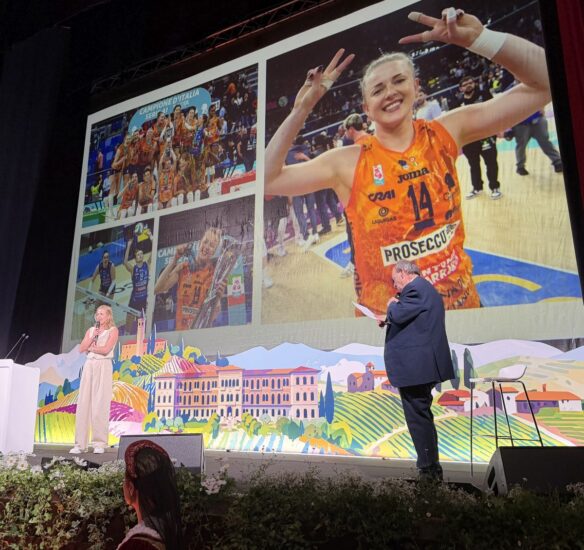
The bond between sport and wine is another area in which Bacchus nectar asserts its healthfulness, of course, within the framework of responsible consumption. This is reflected in support for sports such as volleyball, where athletic performance is essential. One example is Imoco Volley Conegliano, sponsored by Prosecco DOC, a team captained by Joanna Wołosz, who told the Assoenologi audience how “enjoyable it is to celebrate with a glass after winning a match or following a very tough training session”.
Copyright © 2000/2026
Contatti: info@winenews.it
Seguici anche su Twitter: @WineNewsIt
Seguici anche su Facebook: @winenewsit
Questo articolo è tratto dall'archivio di WineNews - Tutti i diritti riservati - Copyright © 2000/2026